 calledges.com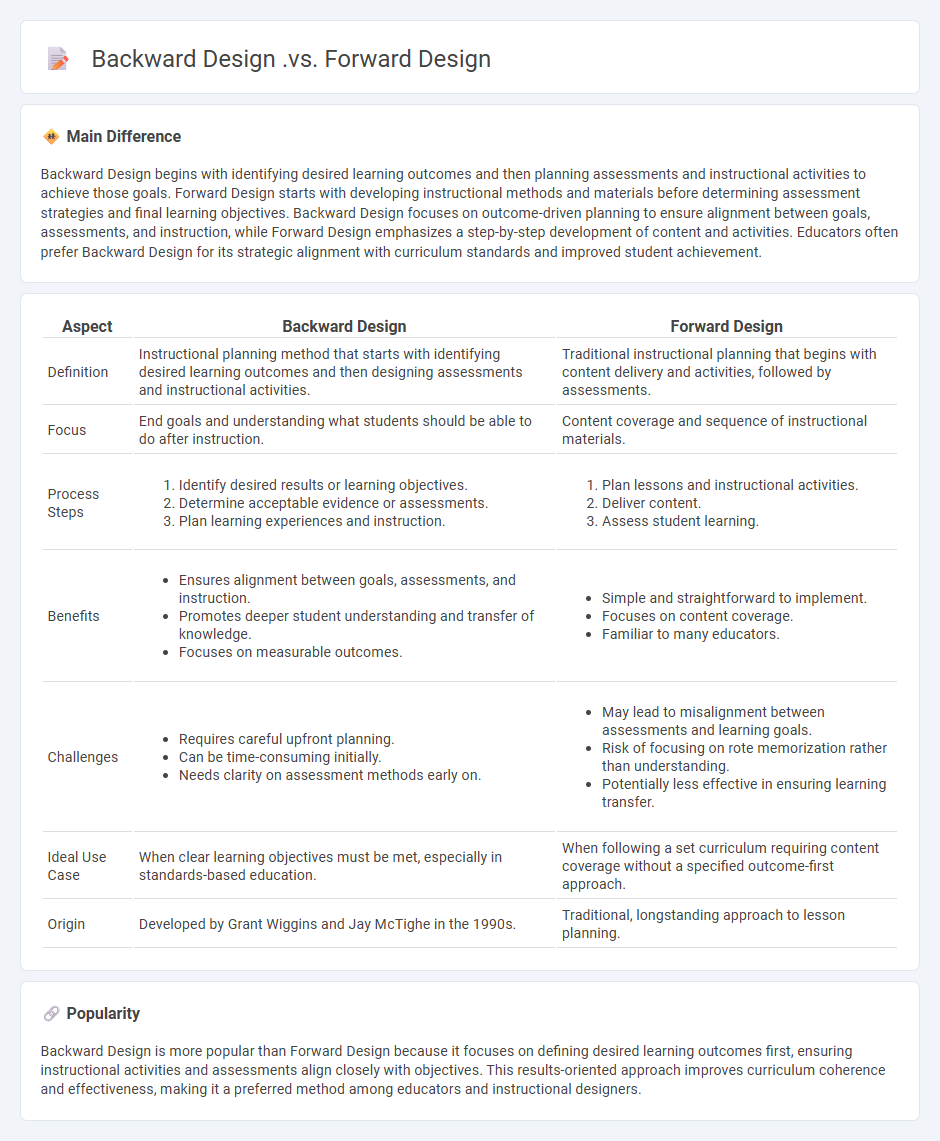
Backward design focuses on starting curriculum planning with desired learning outcomes and assessments, ensuring alignment with educational goals. Forward design begins with content delivery, sequencing lessons before considering final objectives. Explore deeper insights into how these instructional strategies impact effective teaching.
Main Difference
Backward Design begins with identifying desired learning outcomes and then planning assessments and instructional activities to achieve those goals. Forward Design starts with developing instructional methods and materials before determining assessment strategies and final learning objectives. Backward Design focuses on outcome-driven planning to ensure alignment between goals, assessments, and instruction, while Forward Design emphasizes a step-by-step development of content and activities. Educators often prefer Backward Design for its strategic alignment with curriculum standards and improved student achievement.
Connection
Backward Design and Forward Design are connected through their shared focus on instructional planning aimed at achieving specific learning outcomes. Backward Design begins with identifying desired results and assessments, guiding the development of instructional activities, while Forward Design starts with the instructional activities and builds toward assessments and objectives. Both frameworks complement each other by aligning curriculum, instruction, and assessment to enhance educational effectiveness.
Comparison Table
| Aspect | Backward Design | Forward Design |
|---|---|---|
| Definition | Instructional planning method that starts with identifying desired learning outcomes and then designing assessments and instructional activities. | Traditional instructional planning that begins with content delivery and activities, followed by assessments. |
| Focus | End goals and understanding what students should be able to do after instruction. | Content coverage and sequence of instructional materials. |
| Process Steps |
|
|
| Benefits |
|
|
| Challenges |
|
|
| Ideal Use Case | When clear learning objectives must be met, especially in standards-based education. | When following a set curriculum requiring content coverage without a specified outcome-first approach. |
| Origin | Developed by Grant Wiggins and Jay McTighe in the 1990s. | Traditional, longstanding approach to lesson planning. |
Learning Outcomes
Learning outcomes define measurable knowledge, skills, attitudes, and competencies students are expected to acquire after completing an educational program or course. They guide curriculum development, instructional strategies, and assessment methods, ensuring alignment with academic standards and industry requirements. Clearly articulated learning outcomes improve student engagement and facilitate effective evaluation of educational effectiveness. Educational institutions increasingly adopt learning outcomes to enhance transparency and accountability in higher education.
Curriculum Planning
Curriculum planning involves designing structured educational experiences that align with learning objectives, standards, and student needs, ensuring effective knowledge acquisition and skill development. It integrates subject matter, instructional strategies, assessment methods, and resource allocation to create cohesive learning pathways. Research from the Association for Supervision and Curriculum Development (ASCD) highlights the impact of well-planned curricula on student achievement and engagement. Modern curriculum planning incorporates technology integration, differentiated instruction, and cultural responsiveness to address diverse classrooms.
Assessment Alignment
Assessment alignment ensures that evaluation methods directly correspond with learning objectives and instructional strategies, enhancing the accuracy of measuring student achievement. Proper alignment integrates curriculum standards with assessments, enabling educators to identify gaps in knowledge and adjust teaching practices accordingly. Research shows that well-aligned assessments improve student motivation and learning outcomes by providing clear expectations and targeted feedback. Implementing alignment strategies in education supports data-driven decision-making and promotes equity in student evaluation.
Instructional Sequence
Instructional sequence refers to the carefully organized order of teaching activities and content designed to facilitate effective learning and skill acquisition. It integrates pedagogical strategies, curriculum standards, and assessment methods to enhance student engagement and knowledge retention. Research in education emphasizes the use of scaffolding, differentiation, and formative assessment within instructional sequences to address diverse learner needs. Effective instructional sequencing aligns with Bloom's taxonomy and supports the gradual progression from foundational concepts to complex applications.
Goal-Oriented Design
Goal-Oriented Design in education focuses on creating learning experiences that align with specific educational objectives, ensuring that instructional methods and materials effectively address student needs. This approach incorporates user research to identify learner goals, behaviors, and challenges, allowing educators to tailor content for maximum engagement and comprehension. Key tools include learner personas and scenario mapping, which help designers predict and accommodate diverse learning paths. Outcomes often show improved retention rates and higher student satisfaction, demonstrating the impact of goal-directed educational strategies.
Source and External Links
Backward Design - Backward Design starts with clearly defined learning objectives and assessments, then plans learning activities to achieve those identified outcomes, creating cohesive, intentional, and student-centered instruction.
backward design | Instructional Design - Forward Design begins with course content and activities first, followed by assessments and connections to objectives, focusing more on teaching processes; Backward Design reverses this by starting with learning objectives and assessment design to ensure instruction aligns with desired student outcomes.
Move Curriculum Forward with Backward Design - Forward design is topic-centered, planning lessons and assessments in sequence based on content coverage, whereas backward design is learner-centered, starting with student learning outcomes and rigorous assessments before designing learning experiences to support mastery.
FAQs
What is backward design in education?
Backward design in education is a framework where instructors plan curriculum by first identifying desired learning outcomes, then determining acceptable evidence of learning, and finally designing instructional activities to achieve those outcomes.
What is forward design in curriculum planning?
Forward design in curriculum planning is a method that begins with identifying desired learning outcomes and then developing assessments and instructional activities aligned to achieve those outcomes.
How do backward and forward design approaches differ?
Backward design starts with identifying desired learning outcomes and then plans assessments and instructional activities, while forward design begins by planning content and teaching methods before defining outcomes and assessments.
What are the benefits of backward design?
Backward design ensures clear learning goals, aligns assessments with objectives, enhances instructional focus, improves student understanding, and promotes effective curriculum planning.
What are the challenges of forward design?
Forward design challenges include limited flexibility, difficulty in accommodating changes, higher risk of accumulated errors, increased development time, and potential inefficiency in optimizing system performance.
How does backward design impact student learning outcomes?
Backward design improves student learning outcomes by aligning curriculum, instruction, and assessment with clearly defined learning goals, resulting in focused teaching and enhanced comprehension.
When should educators use backward versus forward design?
Educators use backward design when focusing on desired learning outcomes and assessments first, and forward design when developing content and activities sequentially without predefined outcomes.