 calledges.com
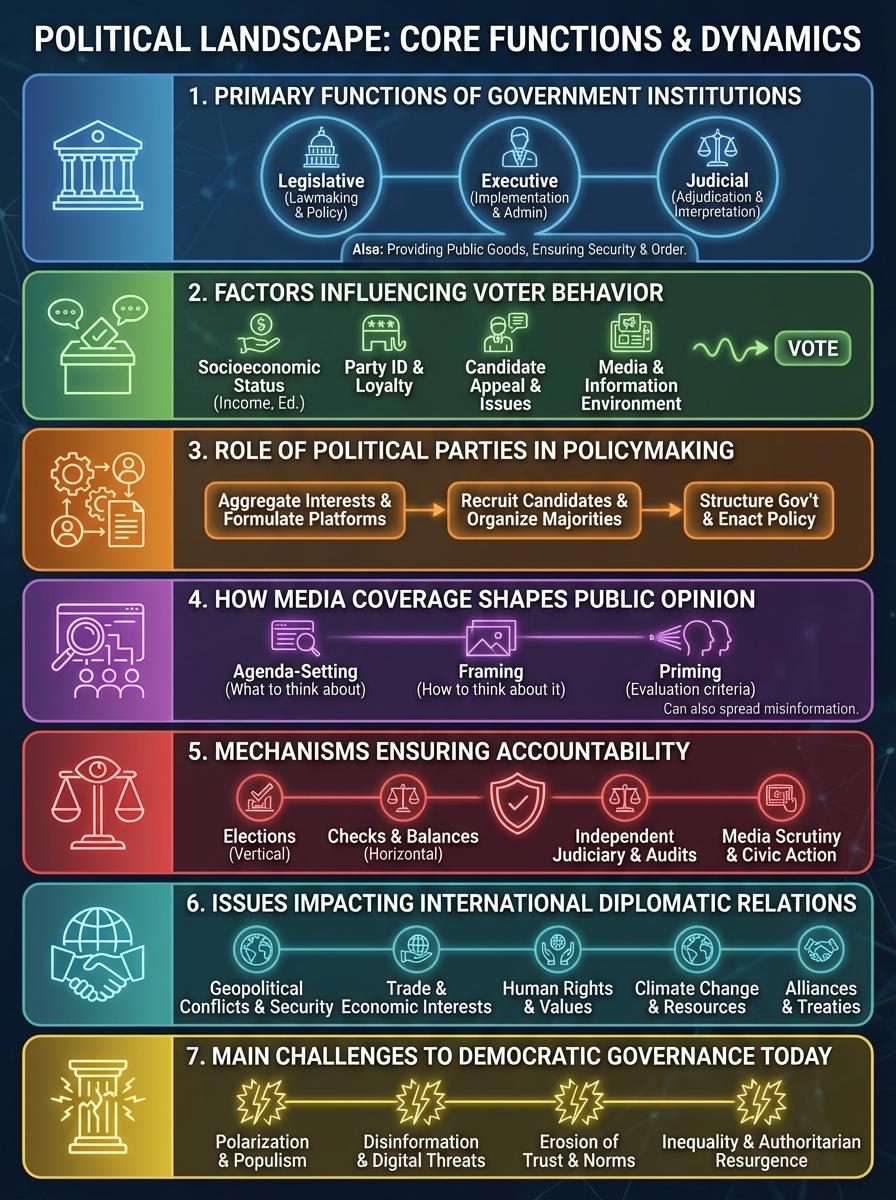
Illustration: Politic's Essential Infographic
Primary Functions of Government Institutions
Government institutions primarily serve to create, implement, and enforce laws that maintain societal order. They provide essential public services such as healthcare, education, and security to ensure citizens' well-being. Additionally, these institutions regulate economic activities and protect citizens' rights through various administrative and judicial branches.
Factors Influencing Voter Behavior in Elections
Voter behavior is shaped by multiple factors including socioeconomic status, political ideology, and personal values. Media exposure and campaign messages significantly affect voter perceptions and decisions. Moreover, historical and cultural contexts influence participation rates and preferences during elections.
Role of Political Parties in Policymaking
Political parties are crucial in the creation and promotion of public policies that reflect their platforms. They organize legislative agendas, mobilize voters, and provide candidates for public office to implement their policy goals. Parties also facilitate government stability by forming coalitions and managing political debates.
Media Coverage and Public Opinion
The media plays a vital role in shaping public opinion by framing issues and highlighting specific viewpoints. It serves as a watchdog holding government accountable while influencing voter awareness and engagement. Media narratives can mobilize political participation or create biases, impacting electoral outcomes.
Mechanisms Ensuring Accountability in Public Office
Accountability in public office is enforced through mechanisms such as audits, transparency laws, and ethical oversight boards. Citizen participation, including voting and protests, also pressures officials to act responsibly. Legal frameworks and independent judiciary systems further ensure that public servants adhere to their duties.
Issues Impacting International Diplomatic Relations
Key issues affecting international diplomacy include trade policies, security threats, and human rights concerns. Diplomatic relations are also influenced by global economic shifts and geopolitical rivalries. Environmental challenges like climate change increasingly shape diplomatic agendas and cooperation.
Main Challenges to Democratic Governance Today
Modern democracies face challenges such as political polarization, misinformation, and voter disenfranchisement. Corruption and erosion of institutional trust undermine democratic processes and citizen engagement. Additionally, balancing security with civil liberties remains a critical governance issue worldwide.