 calledges.com
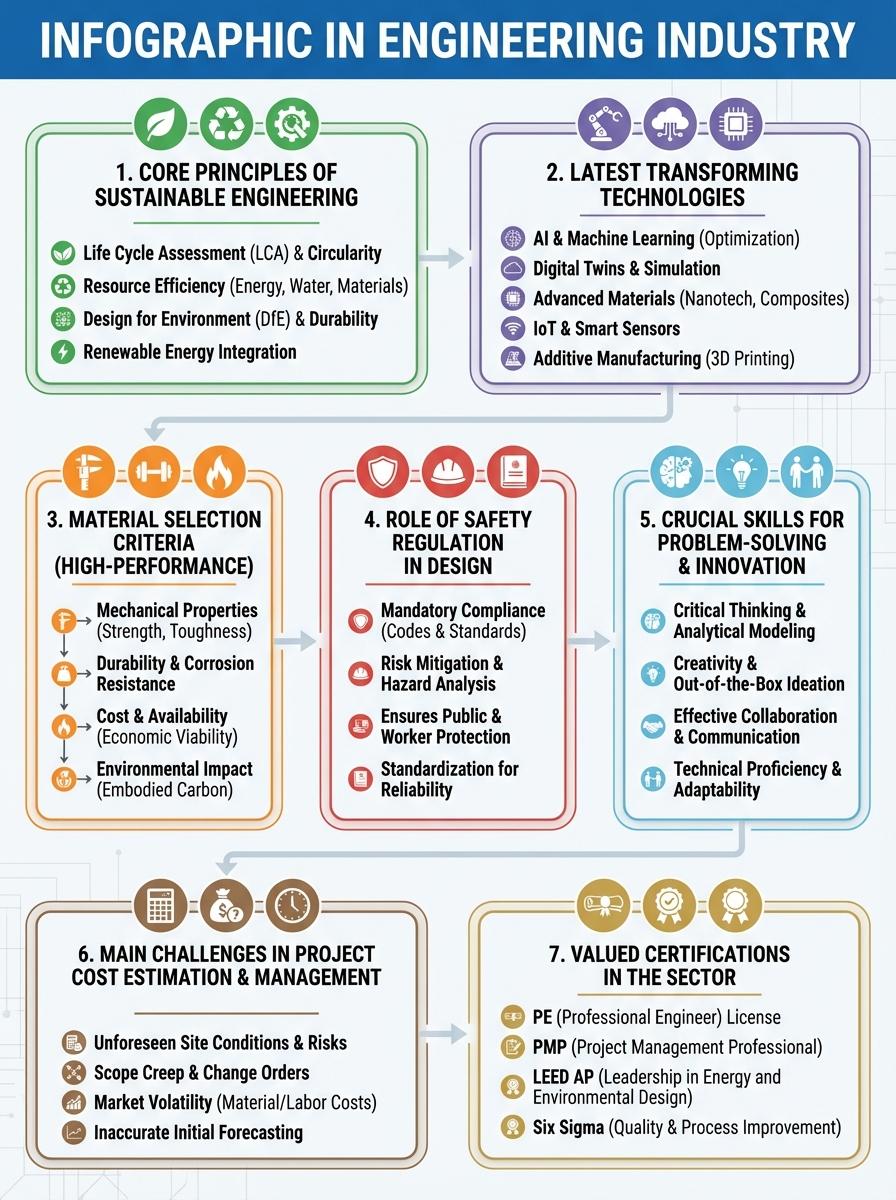
Illustration: Engineering's Essential Infographic
Core Principles of Sustainable Engineering Practices
Sustainable engineering focuses on designing systems that minimize environmental impact while maximizing efficiency. It involves using renewable resources and reducing waste at every stage of a project. The goal is to create long-lasting solutions that support ecological balance and community well-being.
Latest Technologies Transforming the Engineering Industry
Digital twins and Internet of Things (IoT) are revolutionizing how engineers monitor and optimize physical assets. Additive manufacturing, or 3D printing, facilitates rapid prototyping and customized production. Artificial intelligence (AI) enhances design accuracy, predictive maintenance, and decision-making processes.
Criteria for Material Selection in High-Performance Projects
Material durability and mechanical properties are critical for ensuring project longevity under demanding conditions. Engineers evaluate thermal resistance, corrosion behavior, and environmental compatibility. Cost-effectiveness and availability also influence material choices for optimal project outcomes.
Role of Safety Regulation in Engineering Project Design
Safety regulations establish mandatory standards that protect workers, users, and the environment. Compliance ensures hazard identification and mitigation from concept through construction phases. Adhering to these regulations reduces legal risks and enhances the reliability of engineering solutions.
Crucial Skills for Engineering Problem-Solving and Innovation
Analytical thinking enables engineers to break down complex issues into manageable components. Creative problem-solving fosters innovative approaches tailored to unique challenges. Strong communication skills are essential for collaborating effectively across multidisciplinary teams.
Main Challenges in Project Cost Estimation and Management
Uncertainty in resource pricing and fluctuating market conditions complicate accurate cost predictions. Scope changes and unforeseen technical difficulties often lead to budget overruns. Effective risk management and continuous monitoring are vital to maintaining financial control.
Valued Certifications in the Engineering Sector
Professional Engineer (PE) licensure is highly regarded for demonstrating expertise and commitment to ethical standards. Certifications in project management, such as PMP, support leadership capabilities. Specialized certifications in fields like structural, environmental, or software engineering boost career advancement opportunities.