 calledges.com
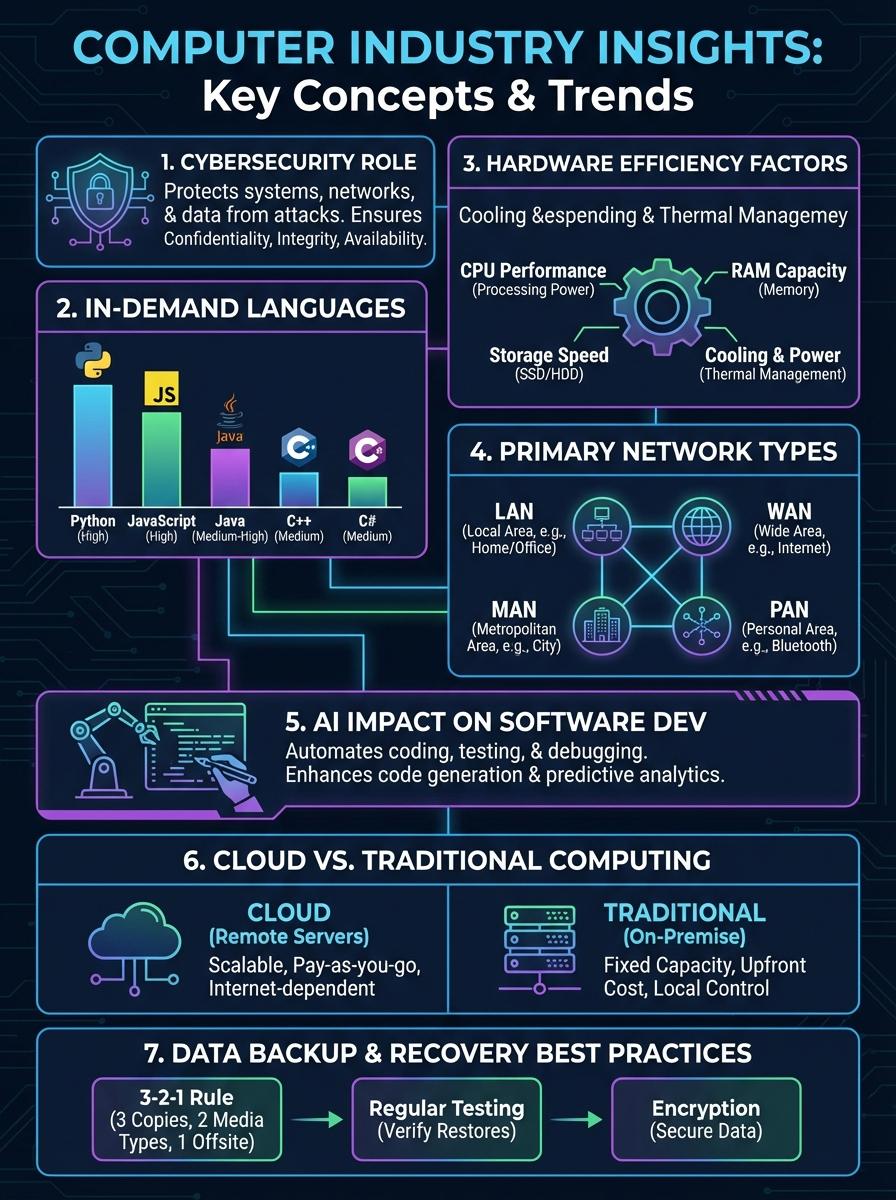
Illustration: Computer's Essential Infographic
The Role of Cybersecurity in Modern Computer Systems
Cybersecurity plays a critical role in protecting modern computer systems from malicious attacks, data breaches, and unauthorized access. It ensures the confidentiality, integrity, and availability of sensitive information across various platforms. As cyber threats evolve, robust cybersecurity measures are essential for maintaining trust and operational stability in all digital products.
Most In-Demand Programming Languages Today
Languages like Python, JavaScript, and Java dominate the current job market due to their versatility and widespread use in web development, data science, and enterprise applications. Additionally, languages such as Go and Rust are gaining popularity for systems programming and performance-critical applications. Mastery of these languages increases career opportunities and enhances project efficiency.
Factors Determining Efficiency of Computer Hardware
The efficiency of computer hardware depends on several factors including processor speed, memory capacity, and disk input/output performance. Energy consumption and thermal management also play crucial roles in overall hardware effectiveness. Balancing these elements ensures optimal performance and longevity of digital products.
Primary Types of Computer Networks
Computer networks are primarily categorized into Local Area Networks (LAN), Wide Area Networks (WAN), and Metropolitan Area Networks (MAN), each serving different geographic and operational scales. These networks facilitate communication, resource sharing, and data transfer between devices. Understanding these types is fundamental for designing and managing digital product infrastructures.
Impact of Artificial Intelligence on Software Development
Artificial Intelligence (AI) transforms software development by automating coding tasks, enhancing testing processes, and enabling predictive analytics. AI-driven tools improve productivity and reduce errors, accelerating time-to-market for digital products. This integration fosters innovation and more responsive software solutions.
Key Differences Between Cloud Computing and Traditional Computing
Cloud computing offers scalable, on-demand resources accessible via the internet, contrasting with traditional computing which relies on local servers and infrastructure. Cloud solutions reduce upfront costs, enhance flexibility, and ensure high availability. These differences shape how digital products are designed, deployed, and maintained.
Best Practices for Data Backup and Recovery
Effective data backup and recovery involve regular automated backups, offsite storage, and routine testing of recovery procedures. Implementing redundant systems and ensuring data integrity are essential to minimize downtime and data loss. Adhering to these practices safeguards digital products and critical business information.