 calledges.com
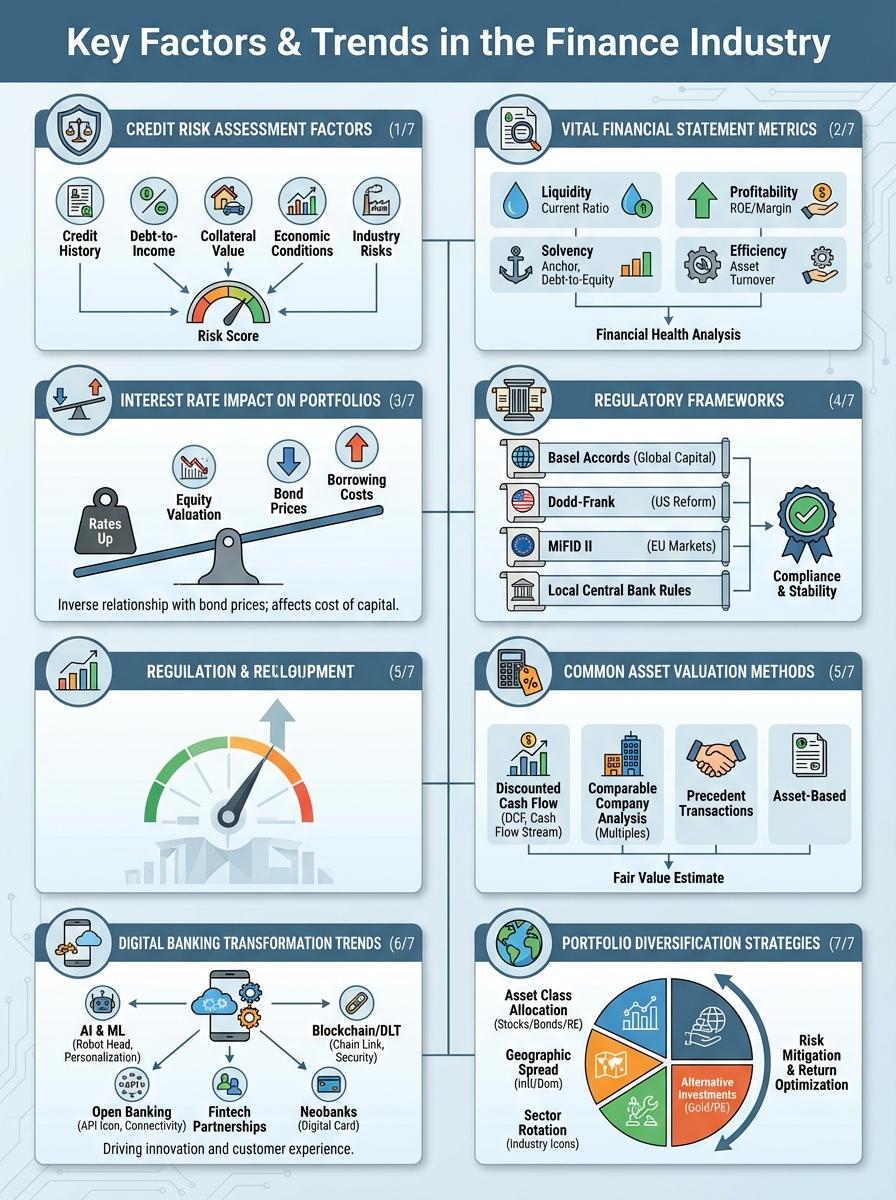
Illustration: Finance's Essential Infographic
Factors Influencing Credit Risk Assessment
Understanding credit risk assessment involves evaluating an individual's or company's ability to repay debt. Key factors include credit history, income stability, and existing debt levels. Advanced digital tools now incorporate AI to analyze these factors more accurately.
Vital Metrics for Financial Statement Analysis
Metrics such as liquidity ratios, profitability ratios, and leverage ratios are crucial in assessing a company's financial health. These metrics help investors and analysts gauge operational efficiency and risk. Digital platforms enhance accessibility to real-time financial data for better decision-making.
Impact of Interest Rate Fluctuations on Investment Portfolios
Interest rate changes directly affect the value of bonds and other fixed-income assets within a portfolio. Rising rates often lead to declining bond prices and can shift investor preference toward equities. Digital investment tools enable dynamic portfolio adjustments based on rate forecasts.
Regulatory Frameworks Governing Financial Institutions
Financial institutions operate under strict regulatory frameworks such as Basel III and Dodd-Frank to ensure stability and transparency. Compliance is critical to managing systemic risk and protecting consumers. Digital solutions assist institutions in meeting these regulatory requirements efficiently.
Common Methods for Asset Valuation
Asset valuation techniques include discounted cash flow (DCF), comparable company analysis, and precedent transactions. Each method provides a perspective on the fair market value of assets for investment or sale purposes. Digital tools automate these calculations for faster, more reliable results.
Trends Shaping Digital Banking Transformation
Key trends in digital banking include mobile banking adoption, AI-driven customer service, and blockchain integration. These innovations enhance customer experience and operational efficiency. Strong focus on cybersecurity remains essential amid growing digital transactions.
Strategies to Enhance Portfolio Diversification
Effective diversification strategies involve spreading investments across various asset classes, sectors, and geographies. Utilizing alternative investments can reduce portfolio volatility and improve returns. Digital platforms provide tools for real-time portfolio analysis and rebalancing.